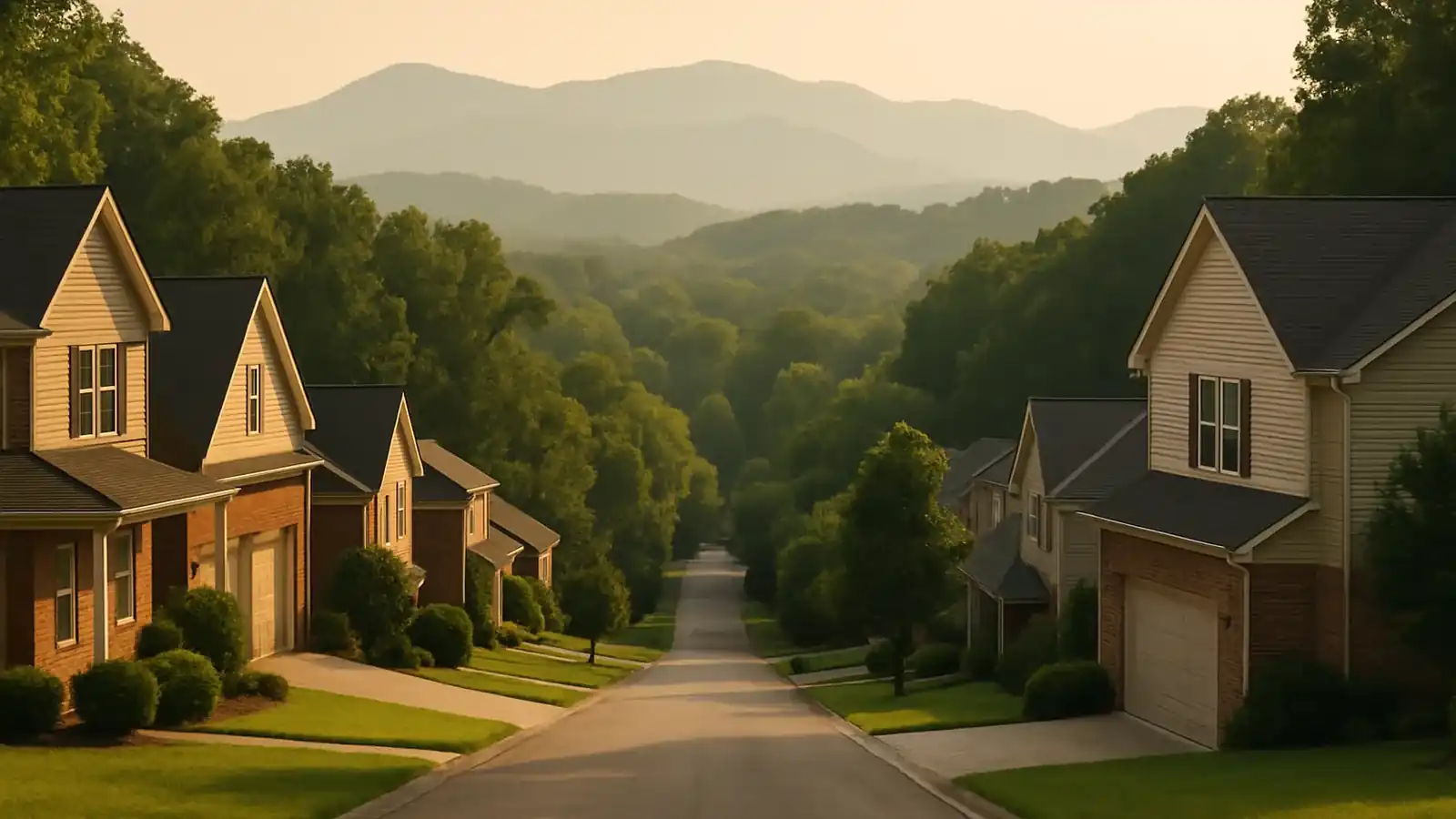
Knox Crawl Spaces serves the corridor: Knoxville plus Farragut, Powell, Halls, Karns, Seymour, Maryville, Oak Ridge, Clinton, and Lenoir City, and a good inspection there takes readings, valley-wide.
Choose your community
FarragutPowellHallsKarnsSeymourMaryvilleOak RidgeClintonLenoir City
Every town we cover, and what changes there
Each of these has its own page, because the ground and the housing stock are not the same across the region. The short version:
Farragut: New houses, old design flaw
Farragut's 1980s-2010s stock went up modern in every way but one: vented crawls were still standard, so even the newer builds off Kingston Pike and around Turkey Creek spend summers importing valley air to condense under conditioned floors. Read what that means for a Farragut property.
Powell: Fifty summers over the line
Powell built out along Emory Road in the 1960s-80s: brick ranches and split-foyers on vented crawls that have now logged five decades of East Tennessee humidity. Read what that means for a Powell property.
Halls: Ridge water meets valley air
Halls sits among genuine ridges, and its 1970s-2000s neighborhoods inherit both halves of the East Tennessee problem: slope runoff aiming at uphill crawl walls every storm, and valley humidity filling the vents every summer. Read what that means for a Halls property.
Karns: Creek-valley clay
Karns spreads along Beaver Creek's valley, and that geography writes its crawl spaces: valley-floor lots keep wetter clay year-round, storm water moves toward the creek through everyone's yards on the way, and the mix of 1970s ranches and 2000s subdivisions means vented crawls at every age of decline. Read what that means for a Karns property.
Seymour: Foothill physics
Seymour climbs toward the Smokies on real terrain: houses stepped into hillsides, crawls half-buried on their uphill sides, and storm water with mountain enthusiasm behind it. Read what that means for a Seymour property.
Maryville: Foothill town, full spectrum
Maryville layers its housing like the county's history: ALCOA-era blocks from the aluminum decades, postwar ranches, and the newer growth rolling toward the mountains. Read what that means for a Maryville property.
Oak Ridge: Crawls with a security clearance
Oak Ridge's founding stock went up in wartime urgency: the famous alphabet cemestos and flat-tops built fast in 1943-45 for the Project's workforce. Read what that means for an Oak Ridge property.
Clinton: River-valley moisture math
Clinton's historic core sits along the Clinch River, and river valleys keep their own moisture books: higher water tables in the flats, morning fogs that feed the air's load, and clay that rarely dries completely. Read what that means for a Clinton property.
Lenoir City: Lakeside air, lakeside stakes
Lenoir City lives beside Fort Loudoun Lake, and lake proximity writes its crawl spaces: humid air with waterfront enthusiasm, breezes that push moisture under houses on the exposed shores, and dock-community housing where crawl condition meets real property values. Read what that means for a Lenoir City property.
Same air, different chapters
The valley's humidity is democratic; the ground beneath it isn't. Farragut's newer crawls seal easy; Powell's fifty-summer stock carries the accumulated ledger; Seymour's hillsides write custom water plans; Oak Ridge's cemestos deserve preservation-grade care; Lenoir City's lakefront air sizes every dryer up. Each page reads its chapter, and the inspection reads your crawl. Between towns? Ask; corridor travel should be quoted honestly.
What it means when we say we cover a town
It means we can pass your request to a local specialist who serves your address, just as in Knoxville. Ask for moisture readings and photographs from under the house, a written scope afterwards, and any travel charge shown as its own line. If a job is far enough out that travel is material, ask for that number before you agree to anything.
Crawl inspections take an hour or so on site, so a longer drive should not change the price of the work.
These 9 communities are the places this site covers regularly, and their ground is described page by page. That is the honest boundary: not a radius drawn on a map, but the places with enough local detail to be useful.
Coverage questions
Is there an extra charge to come out to the outlying towns?
Ask the specialist whether travel applies, and ask to see it as its own line before agreeing to anything. A charge folded into the price of the work is hard to check, because a scope you cannot read is a scope you cannot compare against anyone else's.
My address is not on the list. Is it still covered?
Usually, and it is worth asking. The list is the area this site covers regularly, not a hard boundary. Somewhere between two of these towns is almost always a yes.
Is the first visit free, everywhere on this list?
Many local specialists don't charge for the first visit, but it depends on the company, in Farragut as in Knoxville. Ask when the specialist calls, before they come out. Either way, ask for the moisture readings, photographs and written findings from under the house.
Why does the price differ between towns for the same job?
Because the ground does. Each town page above explains what changes locally, and the quote follows what the visit measures at your specific address rather than an average for the region.
Get a Knoxville crawl space inspection
Tell us what you're noticing (smells, humidity, floor bounce, a wet crawl) and we'll pass your request along for an inspection. A local specialist who works in Knoxville will call you back.