Sagging floor repair in Knoxville runs $1,500–$8,000 for most crawl space structural scopes: adjustable jacks, sistered joists, and new beams for framing that East Tennessee's humid decades softened. Paired with drying, the repair is permanent; without it, it's a subscription.
How valley humidity eats framing, the repair toolkit, and why drying rides every structural scope.
How a floor goes soft in this valley
Wood above the 70% line absorbs (season after vented season) until decay fungi find the moisture content they need and begin subtracting structure. Joist edges go punky, beam bottoms soften, sills near vents and low outside corners lead the decline. The floor reports it as bounce, then as slope toward the middle, then as doors upstairs losing their arguments with frames. Meanwhile settled brick piers and undersized 1960s spans add their own subsidence. It's all repairable, and all readable in one inspection with a probe and a level.
The repair toolkit
| Fix | What it does | Typical use |
|---|---|---|
| Adjustable steel jacks | Restore and hold elevation on proper footings | Sagging beams, settled pier lines |
| Sistered joists | New lumber bolted alongside softened spans | Localized rot, bouncy runs |
| New beams | Replace what decay finished | Beam-bottom rot, undersized originals |
| Sill repair | Rebuild the wall-top wood the vents fed | Perimeter softening |
Lifts are staged gently: floors that sagged over years come back over hours, with finishes watched the whole way.
Why drying rides along
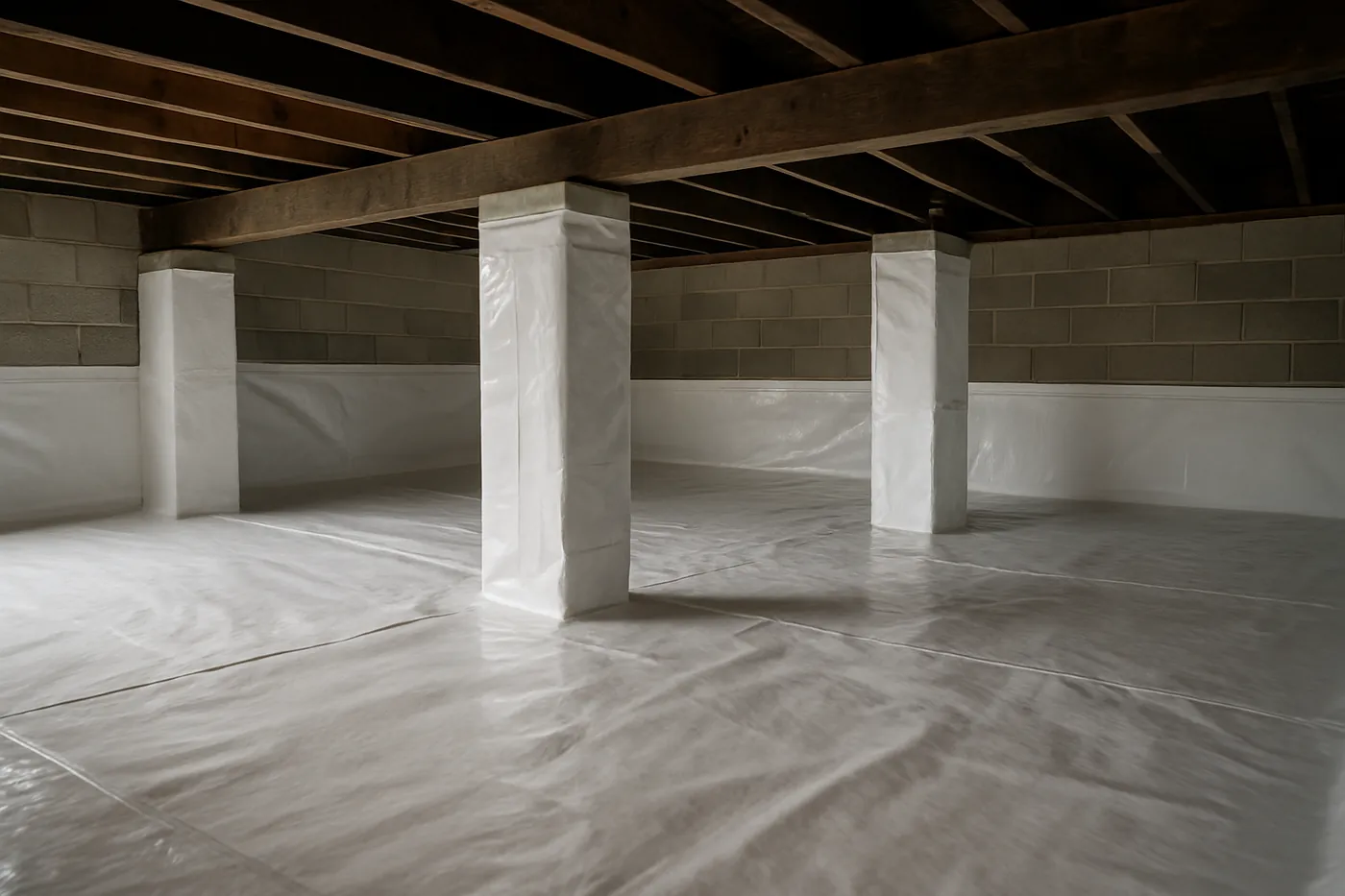
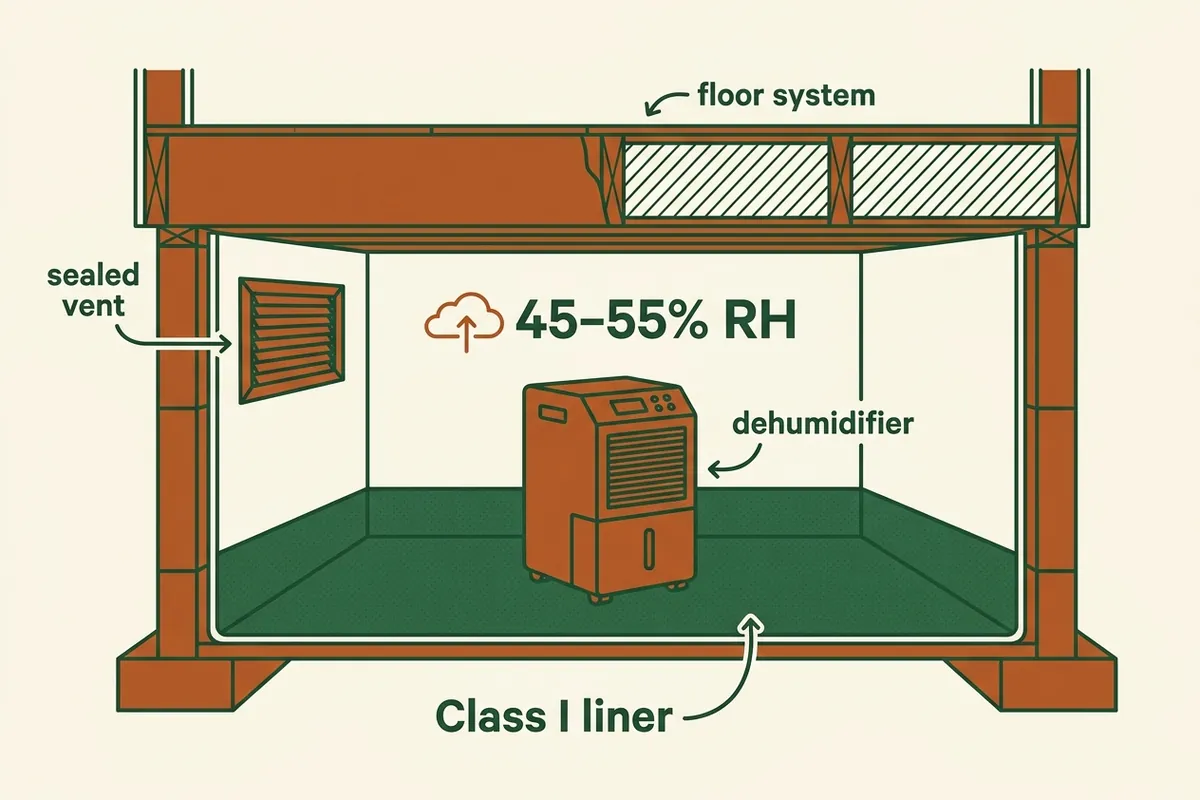
Repairing framing inside a crawl still running 75% RH is refinishing a boat underwater: the new wood starts absorbing the day it's installed. Every structural scope should pair with the moisture answer: drainage where clay seepage feeds the air, seal-and-dry where the whole space needs to come under the line. Fix the wood, retire the cause, and the bounce is gone for the life of the house.
Reading a sagging East Tennessee floor
A bouncy hallway or a dish-rattling step reads like mystery upstairs and like arithmetic below: joists that lost section to decades of humid summers, girder bearing points crushed soft, pier posts standing on dirt where a footing belonged. Knoxville's older stock (the fifty-summer ranches and the pre-war pier houses) carries that ledger in proportion to how long its crawl stayed vented. Repair follows the probe: sister beside original members that still carry, reset bearings on proper footings, replace only what's condemned by reading, not by appearance. Ask for every member touched to be photographed and named in the scope.
The termite caveat belongs in every floor conversation here: East Tennessee's subterranean pressure means soft framing gets probed with the difference in mind, moisture decay and termite galleries call for different responses, and finding the second one changes the scope's first phone call. Either way the moisture correction rides with the wood repair; framing returned to a wet crawl is a repeat appointment.
Floor repair questions, straight answers
Why are my floors sagging?
In East Tennessee, usually because humid decades softened the framing: wood above the 70% line absorbs moisture, decay fungi go to work, and joists and beams slowly lose section. Undersized original framing and settled interior piers join in. The inspection reads which: probing the wood tells the truth fast.
What does sagging floor repair cost in Knoxville?
Most structural scopes run $1,500-$8,000: adjustable steel jacks with proper footings at the low end, sistered joists through the middle, new beams and multiple supports at the top. It should be priced per repair from the inspection, not per square foot of fear.
Can bouncy floors wait a year?
Softening compounds: framing that's absorbing keeps absorbing, and the span that bounces this year deflects visibly next. More importantly, repair-without-drying is a subscription. Fix the framing and seal the crawl in one campaign and the problem actually ends.
What are crawl space jacks, and do they work?
Adjustable steel columns on proper footings, placed under beams to restore and hold elevation: genuinely effective when they're part of a diagnosis, not scattered like furniture. Good installs use footings sized to the load and get adjusted after the crawl dries, because wood moves as moisture leaves.
Will there be termite damage down there?
Sometimes. Moisture's buffet attracts them, and softened framing occasionally turns out to be their work plus rot's. Active colonies get licensed pest control first; then the wood is repaired and the crawl sealed so neither tenant returns. Inspection photos document whatever turns up, either way.
Get a Knoxville crawl space inspection
Tell us what you're noticing (smells, humidity, floor bounce, a wet crawl) and we'll pass your request along for an inspection. A local specialist who works in Knoxville will call you back.