Crawl space dehumidifiers in Knoxville run $1,200–$2,500 installed: crawl-rated units sized to the space, plumbed to a condensate drain, and commissioned to hold 45–55% RH. In this climate the dryer is the seal's working partner, not an accessory.
Why sealed crawls still need drying here, sizing done honestly, and the monitoring that keeps everyone honest.
Why the seal alone isn't enough in East Tennessee
A sealed crawl stops importing the valley's summer air. That's most of the battle. But moisture still arrives: ground vapor works through even good liners at the margins, the house above exhales downward, and every seam is a negotiation. In a mild climate that trickle might not matter; in one where outdoor air spends months saturated, it drifts a sealed-only crawl back over the line by August. Mechanical drying removes the trickle and holds the number, which is why Tennessee's unvented-crawl code language pairs the Class I barrier with a drying mechanism. The system is seal and dry. Both halves, on purpose.
Sizing and installing like it matters
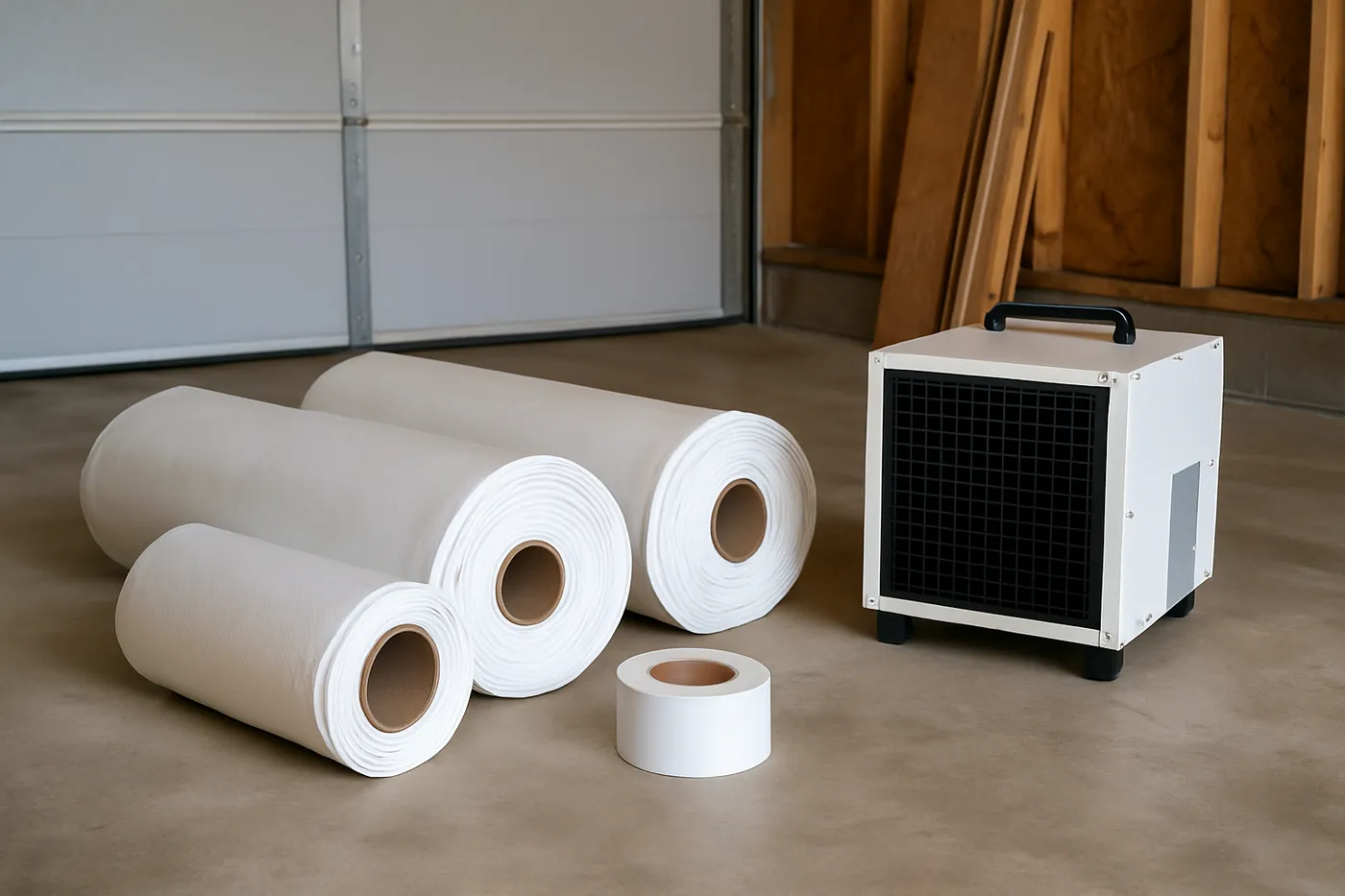
- Sized to the real space: square footage, height, and the crawl's measured starting condition; an undersized unit runs constantly and loses anyway
- Crawl-rated hardware: built for cool, low, dusty duty; years of service where portables manage seasons
- Drained, never bucketed: condensate plumbed to the drainage system or daylight; no one empties anything
- Placed and ducted for circulation: dead corners are where readings go to lie
Commissioned on instruments
Handover is numbers: the starting RH documented at inspection, the post-install drop recorded, the humidistat set to hold 45–55%, and a remote sensor reporting to your phone so the crawl stays auditable from the couch. When a reading drifts, it's a filter or a drain: findable in minutes because the system was built to be watched. Dry crawls in this valley aren't an act of faith; they're a number you can check.
Drying the valley's air on purpose
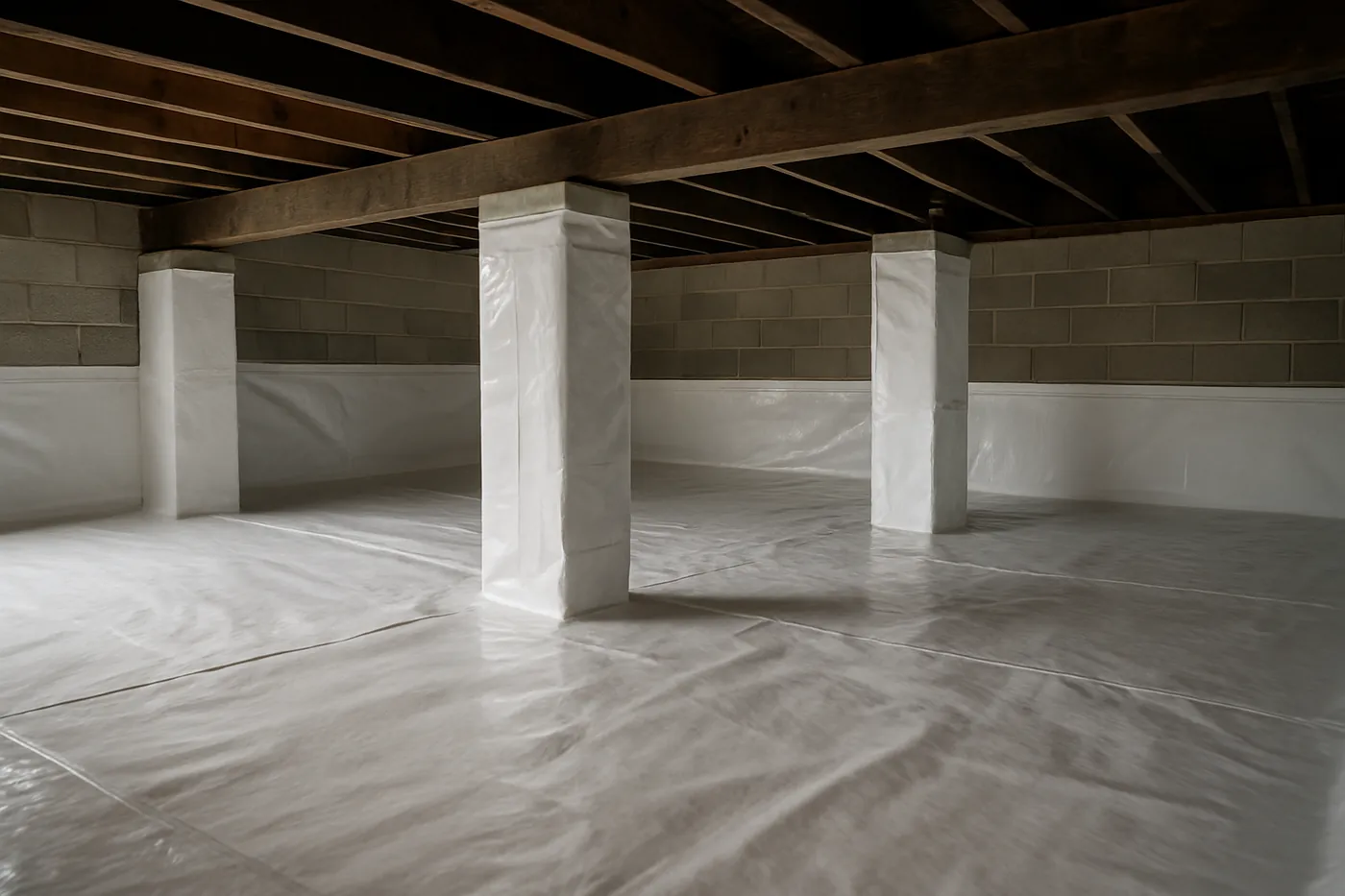
The Tennessee Valley's summer baseline (humid air pooling between ridges, vented crawls above 70% RH for months) makes the dehumidifier the component that converts an encapsulation from sealed to healthy. Spec matters: crawl-rated units built for low-clearance, low-temp duty; condensate plumbed to a drain or sump, never a bucket; airflow ducted so the far corners of the crawl see circulation instead of orbiting the machine. Sizing follows crawl volume and seal quality. An undersized unit in a leaky seal runs continuously and still loses August.
Lakefront and creek-adjacent lots size up a class: proximity to water keeps ambient moisture pressure higher year-round, and the unit that holds 50% in Farragut may hold 60% at the shoreline. Ask the installer to commission the unit with a hygrometer reading at the crawl's worst corner, in writing, because the deliverable isn't equipment, it's a number that holds.
Which dehumidifier setup actually holds?
An East Tennessee crawl spends the summer above 70 percent humidity when healthy wood wants 45 to 55, and a dehumidifier is how a sealed crawl closes that gap and holds it.
| Option | What it means | In this market |
|---|---|---|
| A portable unit from the store | A living-space machine in a space that defeats them | Ridge-and-valley crawls run cool: below the operating floor of living-space units |
| A crawl-rated dehumidifier | Low-temperature rated, drain-plumbed, built to run | The right tool once the crawl is sealed; sized to the volume, drained to a line |
| A fan or vents instead | Moves humid air around without removing any water | Summer air here carries the moisture in: more airflow is more delivery |
| A dehumidifier with nothing sealed | Fights the open ground and the open vents at once | Red clay holding water against the footings will out-supply any machine |
There is a pest dividend in this market: subterranean termite pressure is heavy here, and wood held at healthy humidity is far less attractive than wood at 70 percent. The dehumidifier is quietly part of the termite defence.
Dehumidifier questions, straight answers
What does a crawl space dehumidifier cost installed in Knoxville?
Quality crawl-rated units run $1,200-$2,500 installed: sized to your square footage, set on a condensate drain (never a bucket), and commissioned to hold 45-55% RH. Big-box portables cost less and fail at exactly this job; crawl units are built for low, cool, dusty spaces.
Do I need a dehumidifier if the crawl is sealed?
Yes. The seal stops new moisture entering; the dehumidifier removes what the house and ground still contribute and holds the number through August. Seal-without-dry drifts back over the line in this climate. They're two halves of one system by design and by code.
Can I just run a regular dehumidifier down there?
For a season, maybe. Residential portables aren't rated for crawl temperatures and duty cycles, drain awkwardly, and die young in the environment. Crawl-rated units run cooler, drain automatically, and last. The price difference buys years, not branding.
How do I know it's holding the number?
Instruments, not faith: the unit's humidistat plus an inexpensive remote sensor you can read from your phone. A good install is commissioned with documented readings, which leaves you able to audit your own crawl. The 45-55% target is visible any day you care to look.
What maintenance does the system need?
Modest and worth it: filter checks a couple of times a year, a glance at the condensate line, and the sensor's confirmation that the number holds. Call the specialist when a reading drifts. Drift usually means a filter, a drain, or a door left open, in that order.
Get a Knoxville crawl space inspection
Tell us what you're noticing (smells, humidity, floor bounce, a wet crawl) and we'll pass your request along for an inspection. A local specialist who works in Knoxville will call you back.