Crawl space mold treatment in Knoxville costs $1,500–$5,000 for most remediations: treatment of colonized framing and surfaces, paired always with the drying fix that keeps growth from returning. Above the 70% line, spray-only mold work is a subscription; treatment-plus-dry is a cure.
How valley crawls grow mold, what honest remediation involves, and the pairing rule worth insisting on.
The biology of a vented East Tennessee crawl
Mold asks for three things: spores (everywhere), food (your framing), and moisture above roughly the 70% line (a vented Knoxville crawl, June through September). Growth starts on joist faces over the dampest ground, follows the moisture map along beams and subfloor, and exports its signature upstairs through the stack effect: the musty note that strengthens every summer, the allergies that ease on vacation. It's not exotic; it's the predictable ecology of the design. Which is the good news: change the conditions and the ecology loses.
Honest remediation, step by step
- Document: mapping of spread and moisture sources, ideally with photos, so you see everything first
- Treat: growth removed and surfaces treated across affected framing, containment kept honest
- Repair: spans the moisture also softened get structural attention in the same campaign
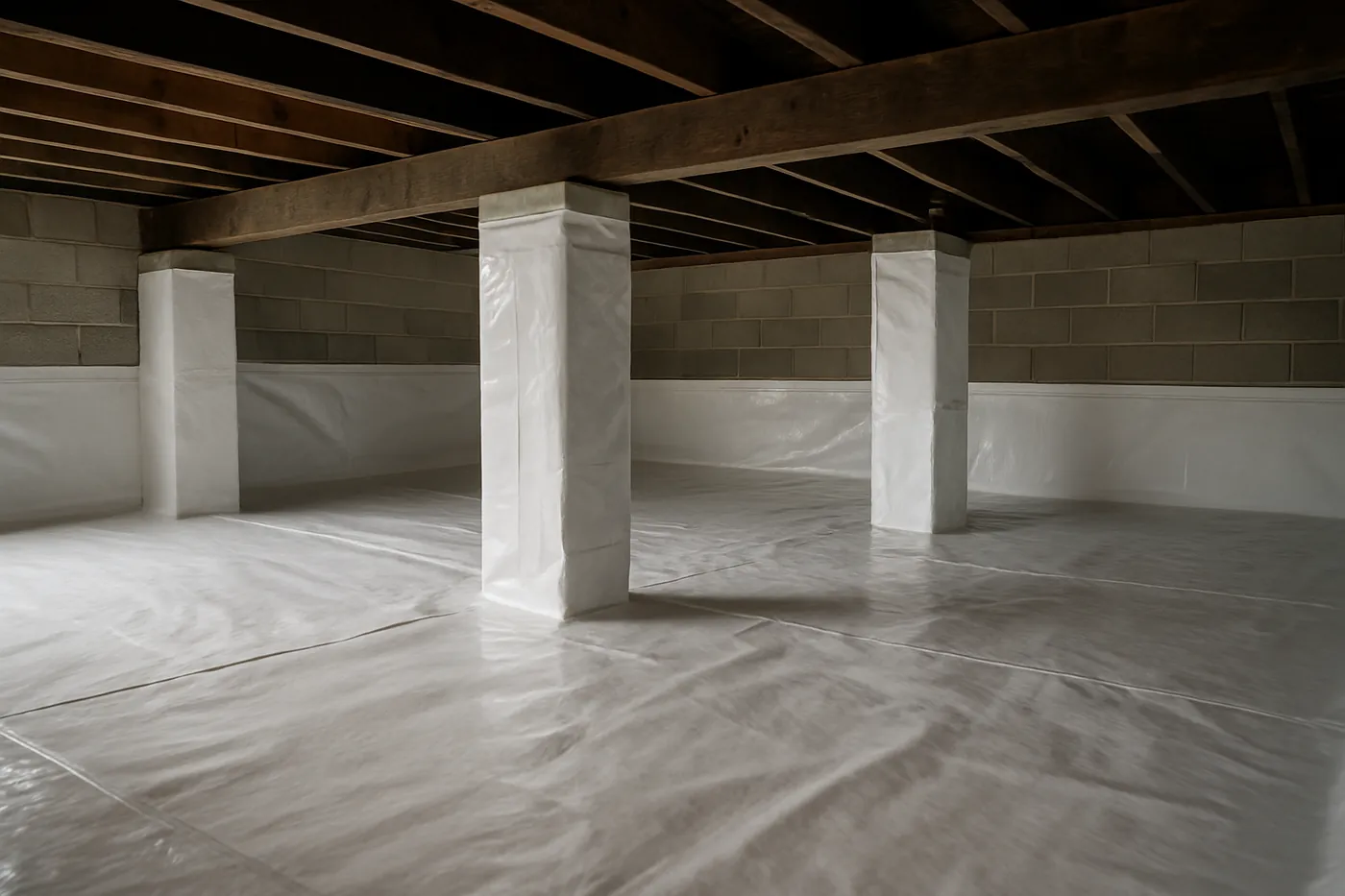
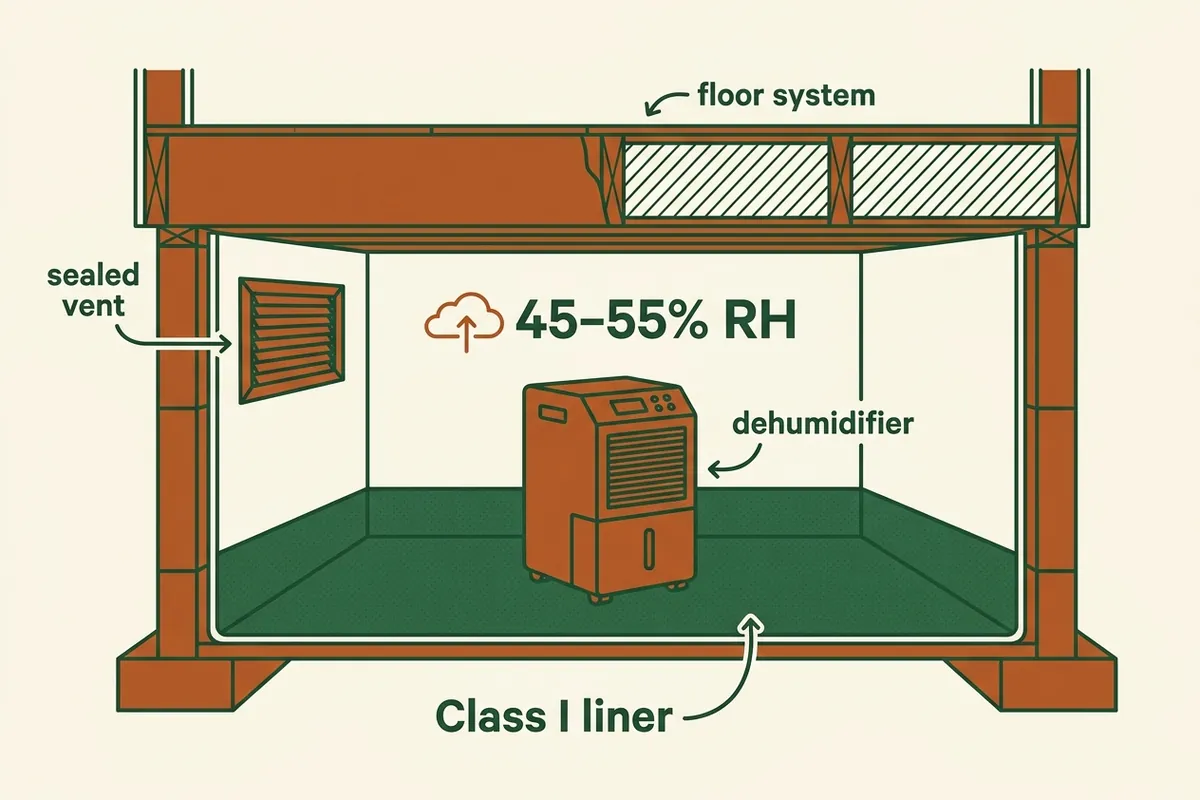
- Dry: the non-negotiable: drainage and/or seal-and-dry bringing the crawl under 55% RH, where regrowth starves
| Scope | Range | Note |
|---|---|---|
| Treatment, contained growth | $1,500–$3,000 | Plus its drying stage |
| Treatment, widespread | $3,000–$5,000 | Often pairs with structural lines |
| The rerun you're avoiding | Every 2–3 years | What spray-only buys in this climate |
The pairing rule
Don't buy treatment without its drying answer, and ask for the drying plan in writing: in a climate that holds vented crawls above the line all summer, killing growth without changing conditions schedules the sequel. Some crawls need only drainage to break the cycle; most need the full seal-and-dry; the inspection says which, with readings. Treat once, dry permanently, and the musty note leaves the house's biography for good.
Treating what seventy-percent summers grow
Under-floor growth in Knoxville is the vented-crawl climate keeping receipts: framing that lived above the moisture line every summer grows what those conditions grow, and the staining maps the crawl's airflow and moisture history like a chart. Treatment sequence is fixed: moisture corrected first (seal, drain, dry into the healthy band), colonized surface growth removed, remaining framing treated, results verified by moisture reading rather than by smell. Fogging a still-vented crawl is a subscription; the valley's next humid season renews it automatically.
A good scope prices remediation and moisture correction as separate lines, sequenced correctly, because the correction is usually the cheaper half and always the deciding one. Where staining crosses into structural softness, the floor-repair playbook joins the scope: probed and named member by member, with the termite question answered during the same visit.
Mold questions, straight answers
What does crawl space mold treatment cost in Knoxville?
Most treatments run $1,500-$5,000 depending on spread and framing condition: surface growth on joists prices lower; colonized framing needing repair prices with the structural work. The inspection should scope it honestly, so ask for the drying that prevents recurrence to be quoted alongside.
Is crawl space mold actually reaching my living space?
Some of its air is: a meaningful share of first-floor air rises from the crawl, carrying spores and the musty signature upstairs. That's why crawl mold pairs so often with allergy complaints that ease away from home, and why treatment plus drying changes the whole house's air, not just the basement's.
Can it just be sprayed and done?
Spraying kills what's there; it doesn't change why it grew. Growth above the 70% line returns on schedule unless the moisture story ends, which is why every treatment should pair with its drying answer, from drainage to full seal-and-dry. The spray-only version sells you a rerun.
Should the mold be tested first?
When it's useful: species testing matters for some health situations and some real-estate transactions, and the specialist can advise on it then. For most crawls the actionable facts are visible: where it's growing, how far, and what moisture feeds it. Inspection photos can document all three.
Will treated framing need repair too?
Sometimes. Growth is a symptom of the same moisture that softens wood, and colonized spans occasionally probe soft. Where they do, treatment hands off to structural repair, sequenced in one campaign so the crawl is opened once, fixed once, and sealed once.
Get a Knoxville crawl space inspection
Tell us what you're noticing (smells, humidity, floor bounce, a wet crawl) and we'll pass your request along for an inspection. A local specialist who works in Knoxville will call you back.